
Parenting an ADHD child can feel like trying to hold back a storm with your bare hands.
You’re not failing. You’re not too soft. And your child is not broken.
The truth is: they’re not misbehaving—they’re dysregulated. And no amount of discipline will regulate a brain that's out of fuel.
This guide offers something different: a fierce, science-informed kindness.
Because understanding the chemistry helps — but kindness changes the outcome.
Not all storms need to be fought.
Some need to be understood.
The Storm Keeper's Playbook for Parents offers a way to parent through ADHD and emotional dysregulation with science-backed kindness — no punishment, no shame, just better outcomes.

Understanding your child’s brain chemistry isn’t about becoming a neuroscientist.
It’s about recognizing what kind of storm you’re in — and knowing how to respond.
When you understand what dopamine, serotonin, and stress hormones actually do, the meltdowns, shutdowns, and power struggles stop feeling personal.
They start to make sense.
And when things make sense, you can respond with calm — instead of punishment.

Your child’s behavior isn’t random. It follows the curves and chemistry of their brain.
When you understand what their brain is trying to do — survive, regulate, reconnect — everything changes.
You stop seeing defiance.
You start seeing patterns.
And from there, you can choose compassion without losing structure.
That’s what this guide is for.

Brains don’t regulate themselves in isolation. They sync with the people around them.
That’s why co-regulation isn’t coddling — it’s a biological need.
When your child’s nervous system goes off the rails, your calm presence is more powerful than any consequence.
This guide shows you how to become the anchor — even when the storm hits hardest.

You’re not doing this because it’s easy. You’re doing it because you love them.
You’ve tried structure, softness, rewards, consequences — and still the storms come.
This guide doesn’t promise to stop the storms.
It helps you meet your child in the middle of them — with understanding, strength, and love that actually works.
Get the Guide That’s Helping Parents Calm the Storm
The Storm Keeper’s Playbook for Parents — Just $12
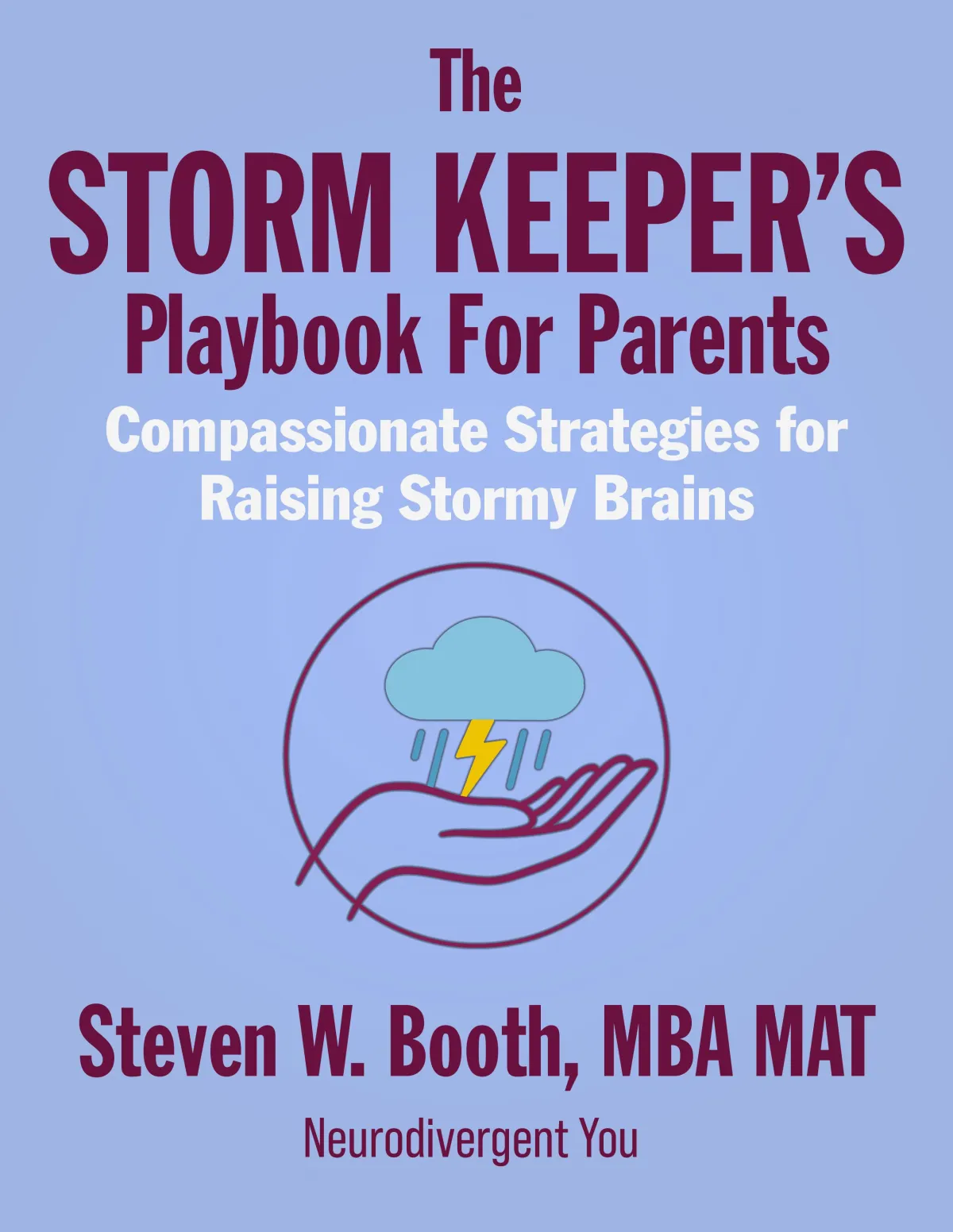
This $12 Guide Could Change the Way You Parent — and How You Feel About It
No Surprises. Here's What You're Getting...
What exactly is this guide?
It’s a short, powerful parenting manual that explains the brain chemistry behind ADHD, emotional dysregulation, and burnout — and how to respond with calm, connection, and science-backed strategies that actually work.
Is this about behavior charts or discipline systems?
No. This guide doesn’t push rewards or punishments. Instead, it helps you understand why your child’s brain acts the way it does — and how to create the conditions for regulation and trust.
Do I need to be a science person to understand it?
Not at all. The guide is written in plain language, with illustrations and metaphors to make tricky brain stuff simple. No jargon. No diagnosis required. Just clarity.
Will this help with more than just ADHD?
Yes. While it’s built around ADHD, it also touches on mood swings, sensory shutdowns, and early signs of burnout — issues common in many neurodivergent kids. It’s especially helpful for parents who feel like “nothing is working.”
What happens after I buy?
You’ll get instant access to download the guide as a PDF. No shipping, no upsells, no hidden steps. Just open it, read it at your pace, and start changing the way you respond — tonight if you want.
What if I have ADHD or bipolar disorder myself?
That’s part of the picture too. Many parents raising stormy kids are neurodivergent themselves. The guide includes language and support for parents who are managing ADHD, mood disorders, or burnout — because kindness has to go both ways.
Is there something for teachers?
Yes. The Storm Keeper’s Playbook for Teachers is a short, direct guide you can hand to a teacher before a 504 or IEP meeting. It explains what your child is dealing with in clear, respectful language — so you don’t have to do all the explaining yourself.
Is there a version for adults with ADHD too?
There is. It’s called The Storm Keeper: Fierce Kindness for ADHD and Bipolar Brains That Just... Won't — written for adults struggling with focus, burnout, emotional overwhelm, and harsh self-judgment. If you're tired of beating yourself up, it’s a place to start healing.
$12. That’s it.
For less than a takeout order, you get clarity, compassion, and a plan that works.
Click below to download your guide and start the shift today.
Copyright 2025 Genius Books & Media, Inc.